Select Page

Before Government Control

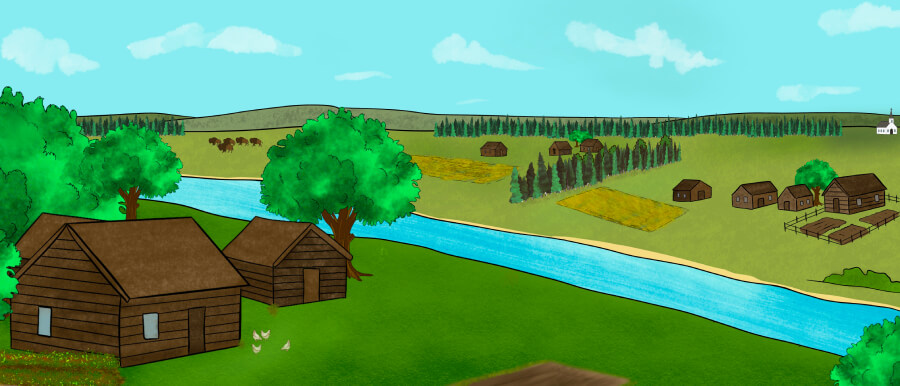
Before the Canadian government got involved, the Métis chose to live near rivers because there was good soil for crops, fresh water to drink, and an easy way to travel by boat. They used the river lot system—long, narrow pieces of land that gave each family access to the river. Villages like Batoche, SK, grew and thrived because of the Métis families who lived there.

A piece of art by Leah Marie Dorion made with mosaics shows two Indigenous people standing near animals, sun, and water.

River lot farms were along the South Saskatchewan River

Treaties and Land Rights

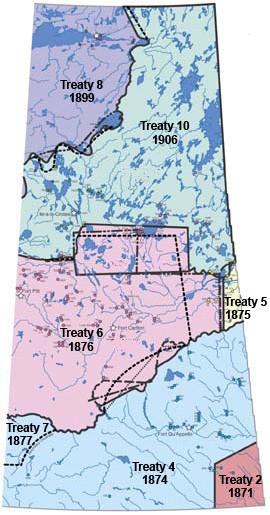
When the numbered treaties (2, 4, 5, 6, 8, and 10) were signed in Saskatchewan, they were agreements between the Crown (the Canadian government) and First Nations. Most Métis people were not recognized in the treaty terms because the government did not recognize them as First Nations. This meant they were left out of the promises the government had made and received no land through the treaties.

A piece of art by Leah Marie Dorion made with mosaics shows two Indigenous people standing near animals, sun, and water.

Photo Credit: Office of Treaty Commissioner

Map of the numbered treaties in Saskatchewan

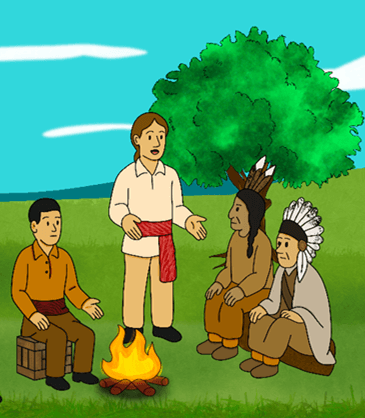
Even though the majority were excluded, the Métis played an important role in the treaty process. They worked as translators, negotiators, peacekeepers, and advocates, helping both sides understand each other. Their language skills, cultural knowledge, and relationships with both Indigenous peoples and settlers were essential in building agreements between the Crown and First Nations.
A piece of art by Leah Marie Dorion made with mosaics shows two Indigenous people standing near animals, sun, and water.

Métis had an important job during the treaty process.

Some Métis that were closely connected to First Nations acted as signers to the treaties and lived on the reserves with First Nations as relatives.
BUFFALO

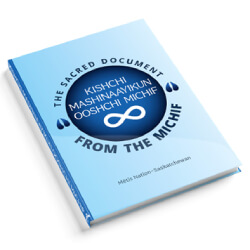
Today the Métis  Nation of Saskatchewan (MN-S) is negotiating a modern treaty with Canada as part of the unfinished treaty business since scrip never used the proper treaty protocol process with the Métis. This modern treaty in Saskatchewan is referred to as, “Kischi mashinahikan oochi Michif” or sacred document of the Michif.

Check Your Understanding