Select Page

Clothing & Métis Sash

Clothing

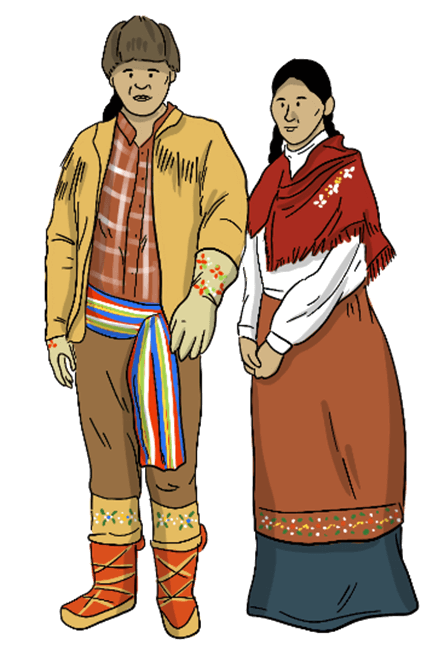
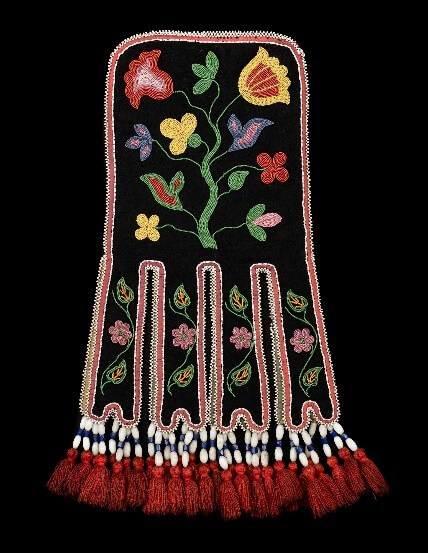
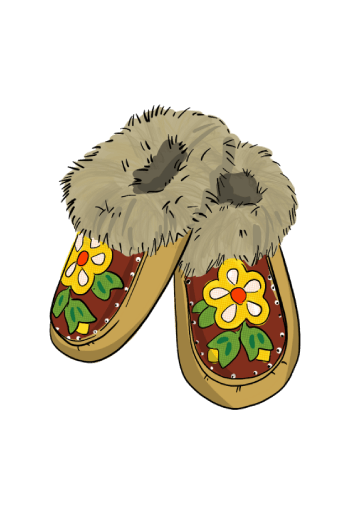
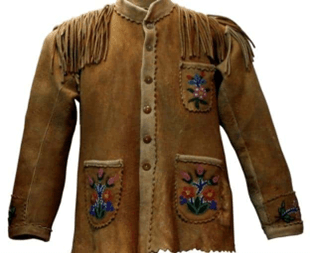
Métis clothing was a combination of styles from their First Nations and European ancestors. The Métis women were responsible for making all the clothing, they used animal hides for vests, coats, and moccasins. They would trade goods for cloth and would purchase material for dresses and children’s cloths at trading posts. Métis clothing like coats, mittens, moccasins, vests, and bags were beaded with decorative floral beadwork.
A piece of art by Leah Marie Dorion made with mosaics shows two Indigenous women facing each other with their hair blowing out behind them. There is a sun with butterflies in the centre, and snakes underneath the ground.

Photo Credit: Western Development Museum

Métis Buckskin Jacket with beaded pockets
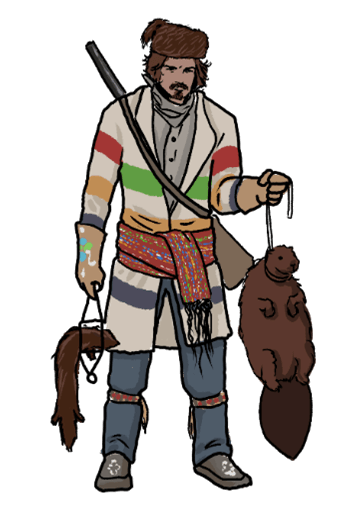
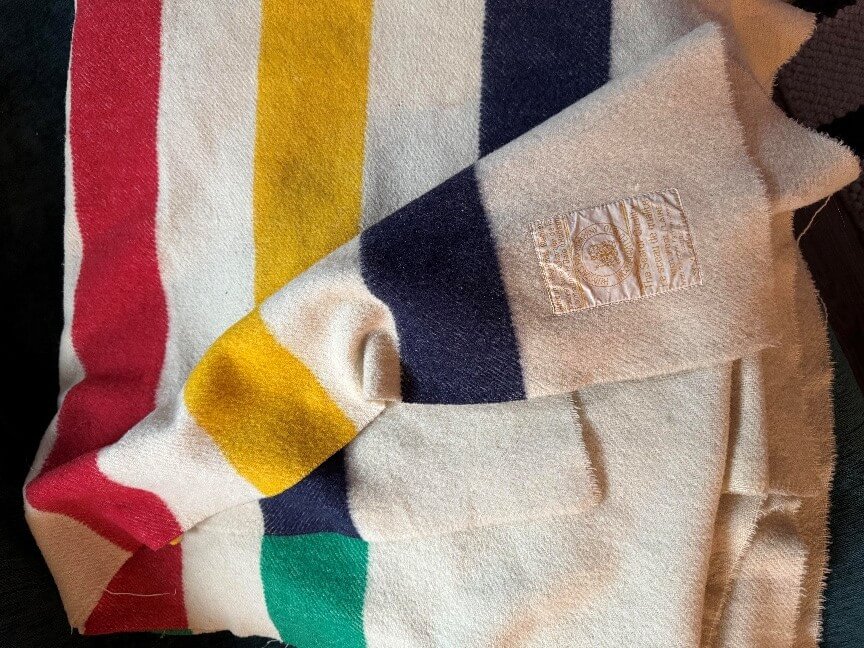
The men wore flannel shirts, trousers, moccasins, and vests or jackets made from animal hides. Men also wore a variety of different styles of hats. In the winter, men wore heavier jackets. Métis were known to make coats called capotes which were made out of Hudson’s Bay Company blankets tied together with a sash or closed with buttons. The women often dressed in longer dresses, or blouses and skirts.

This is an example of a capote

A piece of art by Leah Marie Dorion made with mosaics shows two Indigenous women facing each other with their hair blowing out behind them. There is a sun with butterflies in the centre, and snakes underneath the ground.

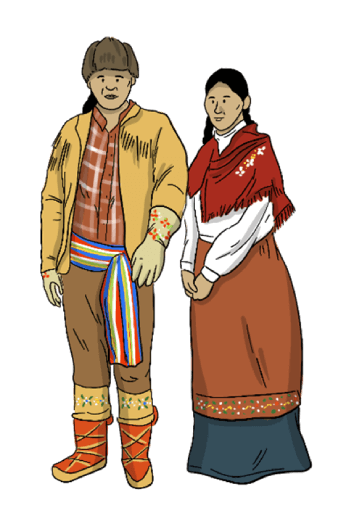
Clothing worn by Métis men and women

A piece of art by Leah Marie Dorion made with mosaics shows two Indigenous women facing each other with their hair blowing out behind them. There is a sun with butterflies in the centre, and snakes underneath the ground.

Octopus Bag

Métis Sash

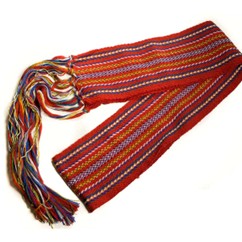
The Métis Sash is one of the most iconic Métis symbols. The sashes were first used by fur trade voyageurs and were a popular trading item. In time, the Métis began to make their own sashes by finger weaving. Métis sashes are approximately 3 meters long with about 15cm of fringe and are many different colours. Traditionally women never wore a sash.
A piece of art by Leah Marie Dorion made with mosaics shows two Indigenous women facing each other with their hair blowing out behind them. There is a sun with butterflies in the centre, and snakes underneath the ground.

Handmade sashes varied in colour based on what thread they had

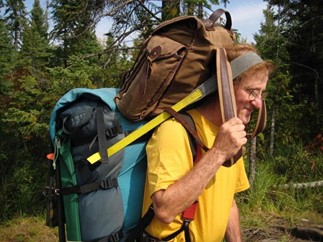
Men wore the sash around their waist and used it for much more than just a belt. The sash was used to help them carry heavy loads (supporting the lower back, carrying packs, or tumplines), as a pocket to hold items, a washcloth, towel, bridle, belt, and rope. The ends of the sash were fringed, and those threads could be used for emergency sewing as well.
BUFFALO
Tumplines are still used today and are useful when hauling gear. You can use any long piece of material to create a tumpline as long as it is secured onto your load!
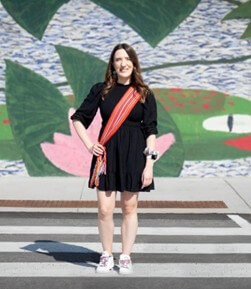
Modern day sashes are now worn as a decorative ceremonial pieces and women typically wear theirs across their body and men wear theirs around their waist. Some Métis organizations are revitalizing sashes by creating their own.
A piece of art by Leah Marie Dorion made with mosaics shows two Indigenous women facing each other with their hair blowing out behind them. There is a sun with butterflies in the centre, and snakes underneath the ground.

Métis women now wear sashes, typically for special occasions

Check Your Understanding