Learn greetings in Michif

Historically, the Métis were multilingual, meaning that they could speak multiple languages. Some Métis were able to speak First Nations languages like Cree, as well as French and/or English. As the Métis people continued to develop a unique culture, they also developed their own language called Michif.
Michif is a language that is influenced by Cree verbs and French nouns, some people who have lineage from French voyageurs and Plains Cree also refer to themselves as Michif.

Michif is an oral language and was never written down until about 40 years ago! Michif is considered an endangered language as the number of fluent speakers are declining, but the number of new learners is increasing!
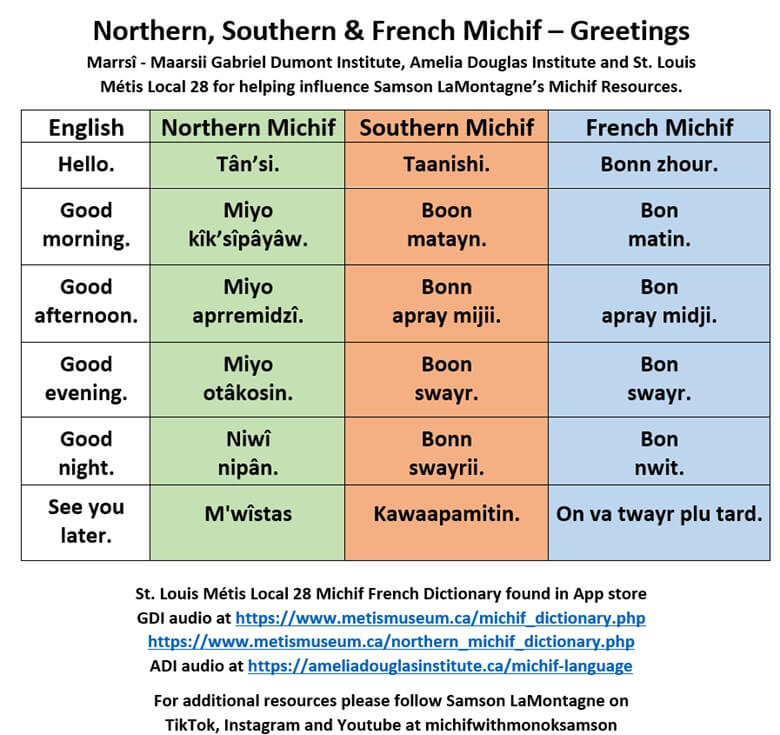
Métis people speak different variations of Michif, they are commonly known as Southern Heritage Michif, Northern Cree Michif, and French Michif.
Learn how to say “hello” three different ways in Michif
Northern Cree Michif is about 92% Cree with some French nouns. The northwest Saskatchewan communities of Île-à-la-Crosse, Buffalo Narrows, Beauval, and Green Lake speak Northern Cree Michif.
Michif French has no Cree verbs and is heavily influenced by French. There are Michif French communities south of Prince Albert, Saskatchewan, like St. Louis, Saskatchewan.
After the Batoche Resistance, the language started to decline because many Métis/Michif hid their identity to protect themselves and some Métis children went to residential schools or day schools where they were not allowed to speak or learn their traditional languages. For the most part, older generations in the family taught Michif at home to the children and it was never to be spoken outside of the home.
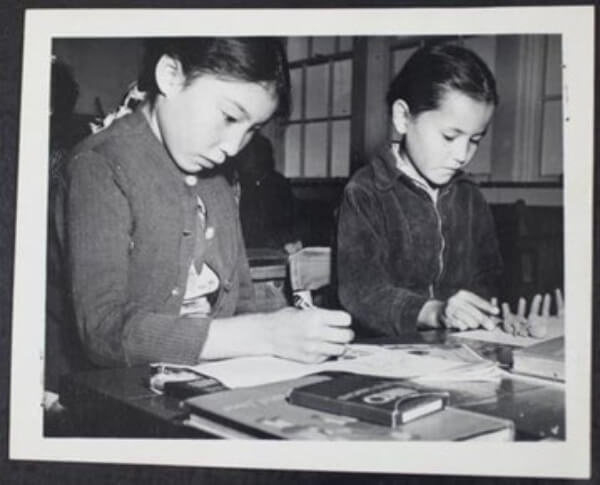
Métis students attending La Loche School